DeSCENT
100-ChipSat Suborbital Deployer for the DeSCENT Mission
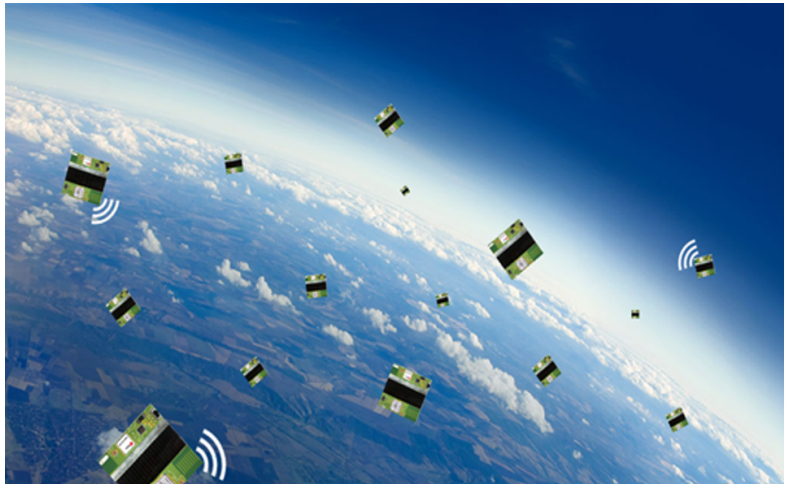
DeSCENT (Demonstration of Suborbital ChipSats Ejected from New Shepard Test Flight) is a mission led by students of the Space Systems Design Studio (SSDS) at Cornell University. ChipSats are gramscale palm-sized spacecraft comprised of COTS electronics assembled onto a single PCB. They are capable of in-situ sensing and radio communication across hundreds of kilometers. The DeSCENT mission explores their potential for distributed sensing and atmospheric science. One hundred ChipSats are housed in a deployer that is mounted to the top of the propulsion module (PM) of the Blue Origin New-Shepard launch vehicle. Through coordination with JHU-APL’s JANUS payload, the deployer shall eject the ChipSats at apogee (approximately 100km). During the estimated 20 minute descent to the ground, the ChipSats beacon GPS, IMU, and environmental sensor data.
Chipsat Design
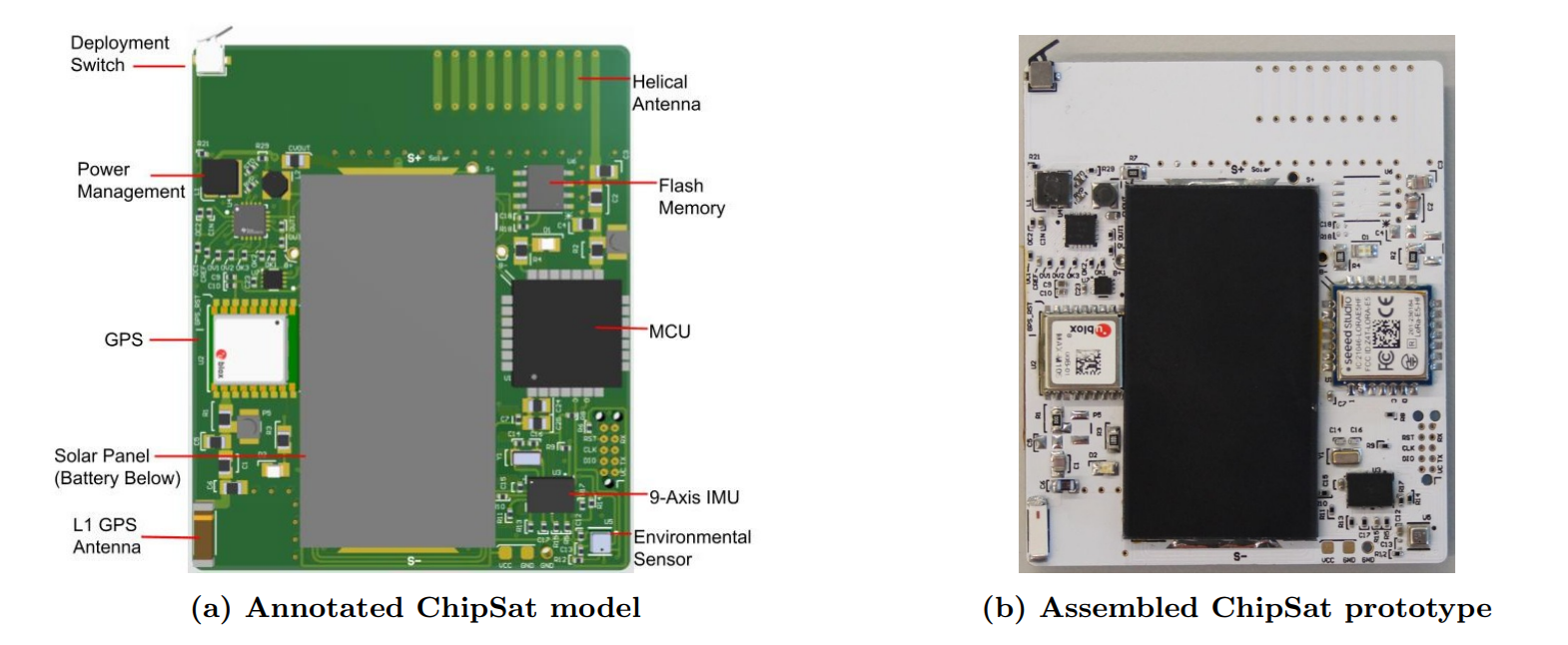
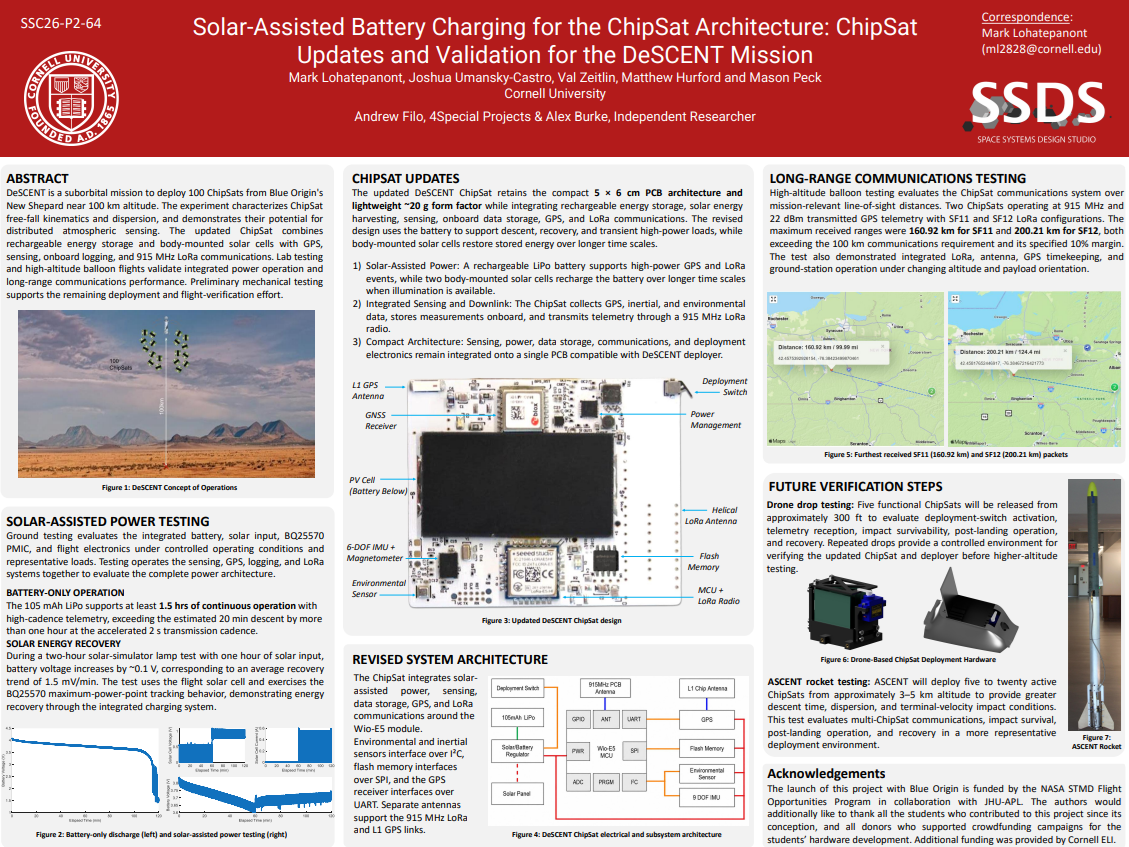
Prior DeSCENT work establishes a baseline architecture for suborbital deployment, environmental sensing, and low-power communications but identifies limited power availability as a primary constraint on extended operation and post-landing recovery. This research presents an updated ChipSat architecture that combines body-mounted solar cells, rechargeable energy storage, and power-management electronics to support intermittent high-power loads from GPS operation and radio transmission. Laboratory testing demonstrates integrated battery operation and battery recovery under solar-lamp illumination. High-altitude balloon testing demonstrates long-range 915 MHz LoRa downlink of GPS telemetry at mission-relevant lineof-sight distances, and preliminary mechanical drops identify impact-vulnerable regions that guide future drone-based and rocket-based deployment tests.
Deployer
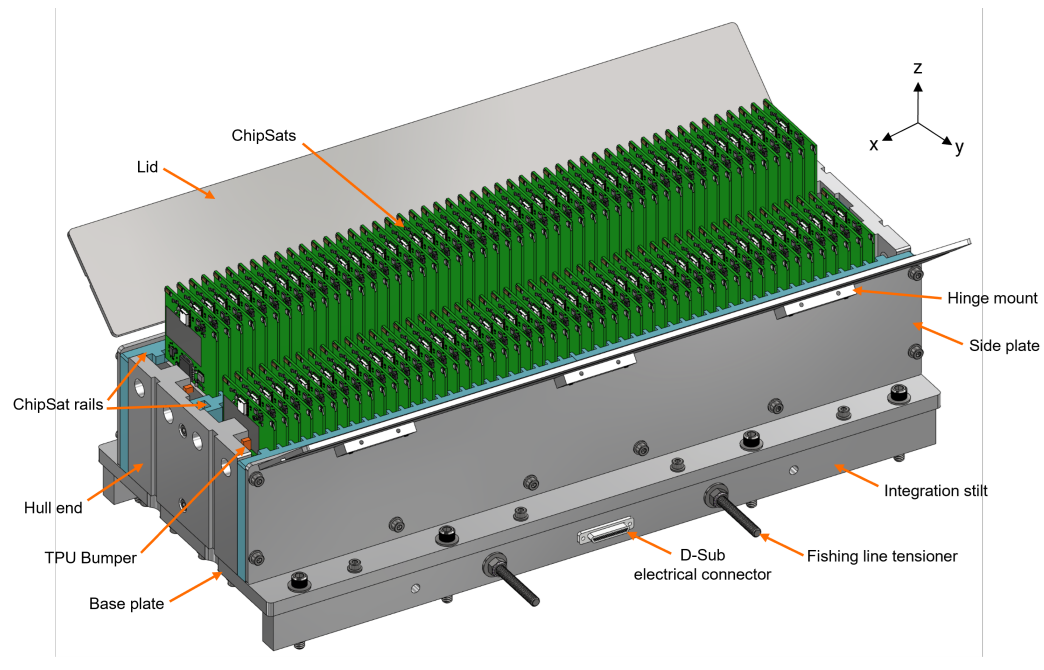
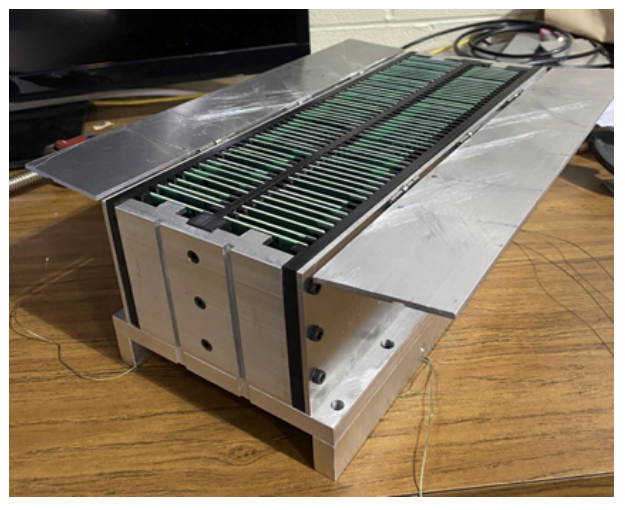
The DeSCENT ChipSat deployer consists of a machined aluminum housing and spring-loaded deployment mechanisms. The structure encloses two independent bays of 50 ChipSats each. These ChipSats are constrained in all directions but the launch axis by 3D-printed rails mounted to the inner walls of the housing (MECH–5).